
Click here for search results

Regional Brief

Available in: Français

Regional Brief last updated September 2008

Overview

Flowers for exportOver the last decade, Africa has registered its highest and most consistent economic growth. Average growth rates of 5.3 percent, now sustained into a second decade for the 15 best performing African countries, and prudent management of their economy has helped cushion the impact of recent global crises.

The forecast is that Africa will post an average growth rate higher than many industrialized economies, notwithstanding the global financial crisis.

Africa’s average growth is expected to be half a percentage point below the projected 6.4 percent. And prudent management of the revenues from the global commodity boom that triggered great inflows of capital in Africa’s oil, gas and mining sectors should help the continent weather the storm.

At all times, but especially during a crisis, Africa’s uneven progress tends to be underplayed and slippages highlighted. The positive trends in school enrollment rates, improvements in service delivery in the health and education sectors, and the fact that Africa has been reducing poverty at a rate higher than South Asia are lost. Headlines about war, famine, disease and misery dominate and overshadow the kind of recognition deserved by the 13 African countries that have attained middle income status and the five others which are on the verge of reaching that threshold.

Yet, Africans see poverty – as widespread as it may be – as a temporary obstacle to the continent’s future of prosperity.

The sixth edition of “Doing Business” – which ranks 178 economies on the ease of doing business based on 10 indicators of business regulation – found that African countries implemented more reforms than in any year since the start of the publication. The report said the pace of reform in Africa has steadily increased since 2005, with a 70 percent increase in the number of countries reforming between 2005 and 2008. In 2008, Africa saw the second highest number of reforms, behind Europe and Central Asia. Out of the 58 reforms carried out this year, two-thirds took place in ten countries primarily in West and Southern Africa .

As in previous years, most African reformers focused on easing start-up and reducing the cost of importing and exporting. Simplifying the process of registering property and obtaining construction permits were also high on the agenda of reformers on the continent.

IDA to Provide Support in Interest-Free Credits and Grants

Textile Factory by Arne Hoel, World BankThanks to a solid 15th replenishment of the International Development Association (IDA), the World Bank’s soft lending arm, the Bank is on course to provide more than US$7.2 billion in interest-free credits and grants to African countries in the course of the fiscal year, which started on 1 July 2008. Record pledges of US$25.1 billion in support of IDA for a total US$41.6 billion for IDA’s current three-year cycle, represent an increase of US$9.5 billion over the previous replenishment (IDA-14), which provided US$32.1 billion.

The World Bank Group for the first time contributed a record US$3.5 billion to IDA, funded equally by the International Bank for Reconstruction and Development (IBRD) and IFC (International Finance Corporation), the Bank’s private sector arm. The transfer to IDA reflects a strong push to leverage the financial strength of the Bank Group as a whole to the global poverty reduction agenda, and efforts to build an inclusive and sustainable globalization.

The solid IDA-15 replenishment means that IDA’s ability to continue providing interest-free credits and grants to the world’s poorest countries – 39 of which are in Africa – is not hurt by the deepening of debt relief over the last few years. Under the Multi-lateral Debt Relief Initiative (MDRI), US$37 billion in debt, the bulk of it owed by African countries, will be written off over the next 40 years for countries with sound financial management and a commitment to poverty reduction.

In 2007, the World Bank Group approved the biggest simplification and reduction in loan charges in nine years for the 79 credit-worthy low- and middle-income countries that are clients and shareholders of IBRD. The move has returned loan pricings to the levels in effect prior to price increases in 1998.

The World Bank has also continued to campaign for a ramping up of both the quantity and quality of aid, including during the September 2008 High Level Forum (HLF) in Ghana that reviewed progress in the implementation of the 2005 Paris Declaration. The Bank endorsed and is actively working on the implementation of the Accra Agenda for Action adopted by the HLF. According to 2005 figures, some 380 million Africans – nearly twice as many as the 200 million in 1981 – live on less than US$1.25 a day. Only four of the world’s 42 poorest countries – the lowest ranked on the 2007/2008 UNDP’s Human Development Index - are in Africa. More than three million Africans are killed each year by HIV/AIDS and malaria.

The World Bank – Leading Financier of Africa’s Development

Factory workers by Arne HoelThe World Bank Group remains the leading financier of development projects in Africa. In fiscal year 2007, it committed a record US$5.7 billion in IDA resources to Sub-Saharan African countries. The amount is $1billion more than in fiscal year 2006. Funding from IDA in fiscal year 2006 of US$1.2 billion in grants and US$4 billion in credits already achieved a doubling of aid compared to fiscal year 2000. In addition, the IFC provided US$1.38 billion in financing for its own account and mobilized an additional US$261 million in financing through syndications.

A significant factor in the Bank’s increased commitment is an expanding investment in infrastructure—particularly electricity generation—badly needed to sustain healthy growth in the higher-performing economies, and to raise productivity in slow-growth countries. In fiscal year 2007, the Bank committed US$2.4 billion of IDA funds to infrastructure projects, of which US$660 million was lending for the energy and mining sectors, and US$870 million was transport sector lending.

Much of the work is guided by the Africa Action Plan (AAP) adopted by the Bank in 2005, which focuses on achieving development results in key sectors such as good governance, closing the infrastructure gap, building capable states, and ensuring that the benefits of development are shared more equitably. The AAP sees regional integration as one of the main pillars on which prosperity will be achieved on a continent with 15 landlocked economies and a gross domestic product the size of Belgium’s. Regional projects accounted for a record US$707 million in fiscal year 2007. By helping to integrate Africa’s small, fragmented economies, these projects are critical to establishing an enlarged economic space for countries in the region, while providing critical links especially for economically vulnerable, landlocked countries. The Africa Catalytic Growth Fund – an integral part of the AAP - agreed to support five projects with projected disbursements of US$148 million by addressing specific constraints that may be holding countries back or blocking progress on the Millennium Development Goals (MDGs). The AAP promotes expansion of public-private partnerships and innovative financing approaches to address some of Africa’s most persistent development problems.

Creative Resolution of Old Development Challenges

Containers at Port by Arne Hoel, World BankTo facilitate its work in conflict-affected areas, the World Bank Group adopted a new Rapid Response Policy in March 2007 under which the Bank is now able to swiftly deliver assistance to countries emerging from or severely affected by conflicts. The policy extends to countries emerging from a major adverse economic and social setback associated with man-made or natural crises. The Bank pursued its collaboration with the New Partnership for Africa’s Development (NEPAD) to achieve peace and stability, both of which are indispensable to accelerate growth, attract investments, and increase exports. It also sustained its commitment to increase transparency and reduce illegal trade in commodities such as oil, gas, diamonds, timber, and other precious resources that fuel conflicts.

The World Bank and the United Nations Office on Drugs and Crime have agreed to a new Stolen Asset Recovery (StAR) initiative committing to ensure that cross-border flow of illicit proceeds of corruption and corporate wrongdoing are intercepted by rich countries and returned to the poor. The StAR initiative also helps recover money secreted away in international bank accounts. The scheme follows fresh research showing massive international flows of illicit funds, estimated to be worth more than US$1 trillion a year. The World Bank estimates that 25 percent of Africa’s GDP is lost to corruption every year, amounting to US$148 billion. Capital flight from Africa accounted for up to 7.6 percent of the continent's GDP between 1991 and 2004, according to the U.N. Conference on Trade and Development, which warned that about US$400 billion in capital has flowed out of Africa since the 1970s, a number far higher than the continent’s debt burden estimated at about US$215 billion.

The World Bank Group has put on notice the so-called vulture funds that prey on the poor and reverse the benefits brought about by the debt relief initiative. By the end of 2005, more than a third of the countries receiving debt relief had been targeted with lawsuits by at least 38 litigating creditors representing these vulture funds. Judgments awarded in 26 of these cases were estimated to be US$1billion, and further judgments are pending.

Through a US$250 million Forest Carbon Partnership Facility, the World Bank will continue to encourage more investment from public and private sector bodies and governments of developing countries to stop deforestation in return for access to carbon credits. Forests are excluded under the Kyoto Protocol, although deforestation, especially in the tropics, contributes about 20 percent of man-made global carbon emissions.

Priority Number One: Infrastructure

ITNs and MalariaSignificant hikes in commodity prices like copper and gold have helped several mineral-rich African nations to cushion themselves from the record oil prices, while higher foreign currency reserves and a lower debt burden have helped absorb the burden stemming from high oil prices.

One of the key threats high oil prices may have imposed on Africa is to infrastructure projects, including many ongoing thermal power projects which were planned under the assumption that oil prices would remain at around US$25 a barrel.

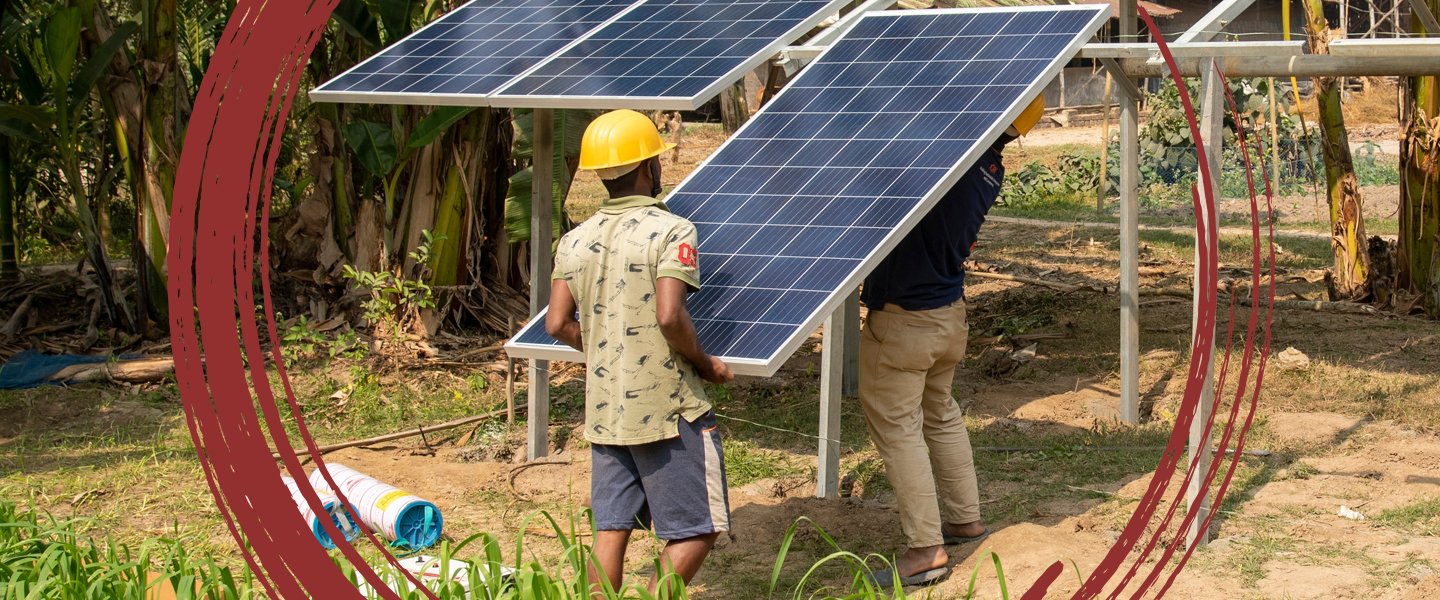
Recognizing the challenge, the World Bank launched a plan to provide inexpensive, safe and cleaner lighting to 250 million people in sub-Saharan Africa who lack access to electricity. The project is designed to replace costly and inefficient fuel-based lighting sources, such as kerosene lamps, that pose fire hazards and cause pollution. The initiative will expand the use of small battery- and solar-powered lighting systems. A major conference on “Lighting Africa” was held in Ghana, May 5-8, 2008.

Coordination, Harmonization, Curbing Transaction Costs

The Bank supports implementation in Africa of the Accra Agenda for Action adopted in early September 2008 following a review of the 2005 Paris Declaration, which recognizes that governments must design and own development priorities, and their international partners must scale-up and provide dependable and outcome-oriented financial flows at lower cost. That approach requires donors to work together, in coordinated partnership, in ways that reduce rivalry and prevent wasteful duplication of efforts. In parallel, the World Bank Group is calling on donors to raise overseas development aid to 0.7 percent of GDP, a target agreed to at the Monterrey Summit.

One area where that teamwork has taken on a new dimension is in the drive to achieve the MDGs. Along with other donors – the United Nations Development Program, the African Development Bank, the European Commission, the International Monetary Fund, etc. – the World Bank is a member of the MDG Africa Steering Group established by U.N. Secretary General Ban Ki-moon to re-focus attention on achieving the MDGs by 2015.

Contacts: Herbert Boh, hboh@worldbank.org


Permanent URL for this page: http://go.worldbank.org/3IGKDWFTG1