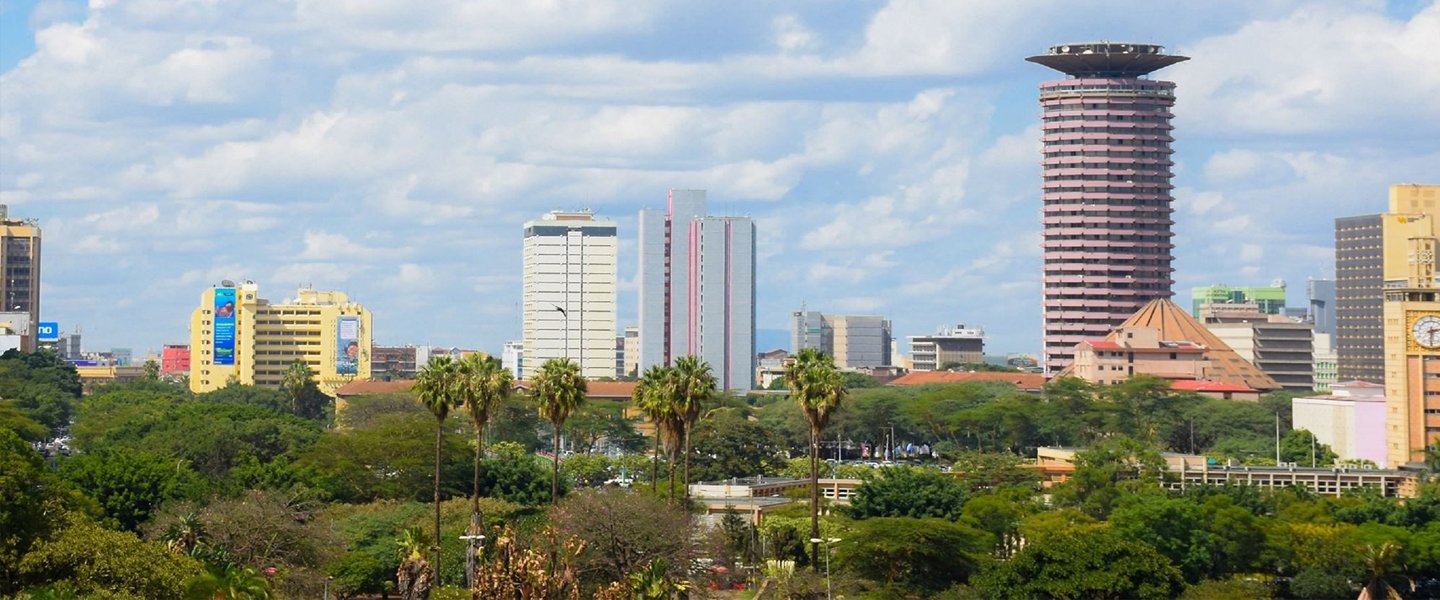
History Country Brief last updated April 2008 
Rwanda is a small, landlocked country in Central Africa with 9 million and a high population density (337 people per sq. km). Rwanda became independent in 1962 after colonization by Germany (1899) and Belgium (1919). In 1961 its monarchical government was formally abolished by a referendum and the first parliamentary elections were held.
Political turmoil over the sharing of power and access to opportunities resulted in explosions of ethnic violence which have marked much of the recent history of the country. A civil conflict pitting the Hutu-led government against the Rwanda Patriotic Front (RPF), a Tutsi-led rebel movement, culminated in genocide, between April and June 1994. About 800,000 people were massacred by the army and the extremist Interahamwe militia. The RPF overthrew the regime in June 1994.
While the country is currently at peace, Rwandans continue to struggle with the legacy of genocide. National reconciliation is a long-term endeavor that has the full commitment of the Government and the support of the international community. The Rwandan Government has undertaken significant measures to consolidate reconciliation including the continuation of the demobilization and reintegration project for ex-combatants and a model of democratization focused on a decentralized administration.
Rwanda has also made significant strides, enacting a new constitution in June 2003 and carrying out the first multi-party presidential and parliamentary elections since independence in August and September 2003, resulting in the election of President Kagame to a seven year term.
The November 9th 2007 communiqué signed between the Governments of Rwanda and the DRC as well as the accord reached in February 2008 between the Government of the DRC and various armed groups auger well for peace in Eastern DRC. Indeed, it reduces remaining risks to the consolidation of Rwanda’s peace and security.
The recent decisions by the UN and by the Government of DRC to more forcefully address the problem of the FDLR (hutu-led militia that took part the 1994 genocide) operating out of the DRC should also contribute to lasting peace and political stability in Rwanda if implemented. Also, legislative elections planned for August 2008 provide opportunity for further strengthening of Rwanda’s young democracy. Economy Since 1994, Rwanda has been able to maintain overall macro stability and implement extensive reforms which have contributed to its strong growth performance. As a result of the reforms taken between 1995 and 2005, GDP growth rates averaged 7.4 percent per annum. Inflation has been contained at few than 10 percent since 1997, with the exception of 2004 when it reached 12 percent. By 1998, GDP had recovered to its pre-1994 level. Economic growth was driven by the recovery in subsistence agriculture and a construction boom during the reconstruction phase .
Macro-economic management has been satisfactory. A three year Poverty Reduction Growth Facility arrangement was approved by the IMF Board on June 5, 2006. Strong implementation of macroeconomic policies enabled Rwanda to reach the HIPC completion point in March 2005 and to qualify for the Multilateral Debt Relief Initiative (MDRI) in March 2006. Parallel efforts have been made to put in place a sound economic governance framework, including independent regulatory agencies, stronger public expenditure management systems with independent audit agencies, and a strong focus on anti-corruption, with strong support from the President.
GDP growth has averaged 5 to 6 percent per year from 2002 – 2006 and is estimated to have exceeded 6 percent in 2007. Agriculture and rural development form the current base of the economy and are key sources of growth, employment and poverty reduction in the short to medium term. In addition, Rwanda has made progress on the MDG targets in regards to gender parity in primary education, immunization of infants against measles, access to safe water, and the prevention of HIV/AIDS. Efforts to promote peace and reconciliation continue, including through the International Criminal Tribunal for Rwanda, the Gacaca community-based conflict resolution system, the demobilization and reintegration of ex-combatants, and the repatriation and resettlement of Rwandan refugees.
Constraints are high in this small, agriculture-based economy. Agriculture currently accounts for just fewer than 40 percent of GDP and provides jobs to 90 percent of the population. Most Rwandans rely on subsistence agriculture; with limited participation in the market economy; (30% to 50% of the rural population in a given year may not produce a marketable surplus). Production remains low, and constraints to agricultural growth are severe: resulting in the scarcity of rural infrastructure and depressed prices for the two main export commodities (coffee and tea). The contribution of the private sector to the economy and poverty alleviation remains limited; there are only about 400 enterprises in Rwanda, of which half have less than 50 employees. Private sector development remains hampered mainly by the perception of high political risks and the high cost of infrastructure services, to a lesser extent; it has also been hampered by the weakness of the financial sector.
Despite the post-conflict rebound, Rwanda continues to be highly dependent on foreign aid to finance its development. External assistance funded 60 percent of total public expenditures on average over the last three years. The outlook for the Rwandan economy depends on peace and stability in the Great Lakes region and the economic and institutional reform program. In the absence of peace in the region or a significant reform program, growth, even under positive conditions, would remain below 6 percent per annum (which is the minimum needed to reach the poverty level of 1990 by 2020). If the situation was to deteriorate, growth could be reduced to 2-3 percent (the current level of demographic growth). Regional cooperation, especially in the infrastructure sectors, is a pre-requisite to economic growth. Rwanda is making good progress. The country has joined COMESA and on July 1, 2007, formally joined the East African Community.
The government has developed a six-tier strategy to fight poverty; a result of a series of consultations on development challenges (as part of the broader reconciliation effort), and an integral part of their “Vision 2020,” which spells out a medium-term development strategy for the country. As a first phase of this strategy, the government prepared a Poverty Reduction Strategy Paper (PRSP) which focuses on six broad priority areas: (i) rural development and agricultural transformation, (ii) human development, (iii) economic infrastructure, (iv) good governance, (v) private sector development, and (vi) institutional capacity building. The PRSP was discussed by the Bank’s Board in 2002. The implementation of the PRSP was monitored through Annual Progress Reports prepared by the Government of Rwanda. There has been substantial progress in reallocating funds to priority areas while reducing military spending, improvement in social service delivery (primary education, immunization), along with related reforms in the education and health sectors. There has been limited progress in the areas of private sector development and export promotion,. A key area where further progress is needed for growth and poverty reduction is rural development. Greater emphasis toward improving program implementation, monitoring and evaluation is also needed.
The Government has recently completed and adopted its second PRSP, now called the Economic Development and Poverty Reduction Strategy (EDPRS). In order to achieve the Government’s long term development goals, the EDPRS has a strong focus on growth through improved economic infrastructure and greater productivity of agriculture. The EDPRS also pays particular attention to program implementation. Development picture / Donor coordination Rwanda receives about US$ 500 million in external assistance per year (which finances about 50 percent of public spending) from about ten significant bilateral and multilateral donors: About a third of external assistance is provided through budget support (African Development Bank, DFID, European Commission, Germany, Netherlands, Sweden, and World Bank). The rest is provided through projects, using parallel delivery mechanisms and donor procedures (African Development Bank, Belgium, European Commission, Germany, Netherlands, UK, US, World Bank, and various UN programs and the Global Fund).
 Source: Rwanda aid effectiveness report 2005.
 Source: Rwanda aid effectiveness report 2005.
The government has repeatedly raised two major sets of concerns with regard to the quality of assistance the country receives:
The volatility of assistance, which affects the government’s capacity to plan and execute the budget. This volatility has three main sources: (i) changes in year-to-year allocations by donors; (ii) discrepancies between planned and actual disbursements for projects, which may be caused by implementation and procedural issues; and (iii) discrepancies between planned and actual budget support, which may reflect conditionalities, both economic and political. The relatively high transaction costs, in a context of limited administrative capacity. Because each donor has its own procedures and requirements, the demands on Rwandan staff are often overwhelming, and crowd out a number of other important tasks that the same staff should perform. The government has voiced its preference for donors to move towards common aid delivery approaches at the sector level, relying to the extent possible on government processes and systems, i.e., gradually shifting away from a fragmented project approach through the use of common systems for negotiating, planning, implementing, and monitoring.
Rwanda has launched a series of ambitious efforts to tackle these issues:
Rwanda has been a pilot for budget support harmonization since 2002. Rwanda’s harmonization process was launched shortly after the country completed its Poverty Reduction Strategy Paper (PRSP). This was formalized through a Memorandum of Understanding between the donors and their key partners signed in November 2003. Broadly stated, the memorandum states donors’ commitment to harmonize and align their practices with regard to (a) process and timing (to synchronize with the government’s budget cycle); (b) common criteria for evaluating macroeconomic performance; and (c) requirements for public financial management and governmental fiduciary arrangements. This successful effort led the government to seek similar harmonization for project financing. Major steps have been taken in the education and health sectors (where Sector wide Approaches are applied and joint reviews are a practice), on transparency and governance issues (where donors are jointly carrying out a Joint Governance Assessment), to support capacity building (where and the government has developed a multi-donor common framework), and to fight HIV/AIDS (where procurement procedures are harmonized between the Bank and the Global Fund). In July 2006, through a broadly consultative process with the development partners, the GoR adopted an Aid Policy to increase aid effectiveness In addition, the government and UNDP co-chair monthly Development Partners Coordination Group meetings In addition, the country is now leading the development of a Common Performance Assessment Framework to which all donors will align and draw from in meeting their respective fiduciary requirements for their external assistance. The aim is to reduce the transaction costs on government.
World Bank role In August 2006, an Interim Strategy Note(ISN) was presented to the Board for FY07 and FY08. The ISN bridges the gap between the previous CAS and the next CAS which will cover 2008 – 2012. This will ensure that the CAS is aligned with the country’s second PRSP, now called the Economic Development and Poverty Reduction Strategy (EDPRS) which was completed in 2007.
Support under the new CAS will be organized around two pillars :
1) Economic Transformation and Growth Establish an Integrated policy framework that prepares Rwandans with skills for lifetime productive employment. Improve access to and quality of key infrastructure services Improve environment for sound private and financial sector development Agricultural productivity, particularly for food crops, raised in a sustainable manner Strengthen the capacity to manage public resources (financial, human and natural) – at central and local levels – strengthened
2) Social Risk and Vulnerability
Increase access to and improve quality of health services, particularly for child and maternal health Mitigate Significant social risks to vulnerable groups and to social cohesion in Rwanda The current portfolio includes 13 active national projects as of April, 2008, which cover a number of sectors (total commitment: US $368 million).. The overall implementation performance is satisfactory. Since 2004, the Bank has been providing the bulk of its financial support through Poverty Reduction Support Grants (which provide resources to the budget to support a multisector, poverty-focused reform program). The Bank is also providing substantial assistance in the form of analytical work to help the government deepen its overall reform agenda, particularly in selected sectors (including health, education and agriculture).The current portfolio includes 13 active national projects as of April, 2008, which cover a number of sectors (total commitment: US $368 million).. The overall implementation performance is satisfactory. Since 2004, the Bank has been providing the bulk of its financial support through Poverty Reduction Support Grants (which provide resources to the budget to support a multisector, poverty-focused reform program). The Bank is also providing substantial assistance in the form of analytical work to help the government deepen its overall reform agenda, particularly in selected sectors (including health, education and agriculture).
As of April 2008 the World Bank portfolio comprised thirteen active National and six regional projects as follows:
National Projects 
| A US$ 33.4 million Human Resources Development Project(approved in June 2000, effective in January 2001) to assist in developing and implementing a sustained program of capacity building through education and skills development; | 
| A US$ 40.68 million Competitiveness and Enterprise Development Project(approved in April 2001, effective in December 2001) to help the government establish an enabling environment for private sector-led economic growth and poverty reduction; | 
| A US$ 48 million Rural Sector Support Project(approved in March 2001, effective in October 2001) to help equip farmers, other target groups, and the government institutions with institutional and technical capacities; | 
| A US$ 25 million Emergency Demobilization and Reintegration Project(approved in April 2002, effective in September 2002), to help the government to (a) demobilize armed and ex-armed groups; and (b) facilitate their reintegration into civilian life; | 
| A US$ 40.5 million HIV/AIDS Multi-Sect. Project(approved in March 2003, effective in August 2003) to help the government to (a) slow down the spread of HIV/AIDS; and (b) expand support and care for people infected or affected by HIV/ AIDS; | 
| A US$ 25 million Urgent Electricity Rehabilitation Project(approved in January 2005, effective in July 2005) to alleviate power shortages; and enhance the capabilities of energy sector institutions in Rwanda;(See Link in annex) | 
| A US$ 20 million Decentralization and Community Development Project(approved in June 2004, effective in December 2004) to boost the emergence of a dynamic local economy, through communities who are empowered to lead their own development process under an effective local government; | 
| A US$ 20 million Public Sector Capacity Building Project(approved in July 2004, effective in March 2005) seeks to reduce the acute skill gap resulting from war and genocide by strengthening capacities at the central and local government levels, and in the private sector and Civil Society Organizations (CSOs); | 
| A US $20 million Urban Infrastructure and City Management Project(approved in November 2005, effective in June 2006) to increase access to priority urban infrastructure in Kigali and two secondary cities; | 
| A US $10 million e-Rwanda(approved in September 2006, effective in June 2007,) to improve (i) efficiency and effectiveness of some internal processes of the Government of Rwanda, and (ii) the delivery of services in selected key sectors including better access to information through the use of technology; | 
| A US$ 11 million Transport Sector Development Projectof Rwanda (approved in August 28, 2007) to improve the quality of Rwanda's paved road network and to generate sustained employment in rural areas through road maintenance works. |  | A US$6 million Competitiveness and Enterprise Development Supplemental Project (additional financing) to establish an enabling environment for growth and development of the private sector that would help reduce poverty in Rwanda. The project is designed to promote a competitive climate by: (i) streamlining the business environment; (ii) reducing costs and increasing the efficiency of telecommunications, water & electricity utilities, and the tea industry; and (iii) improving access to financial and support services to local entrepreneurs. (See Link in annex) |  | A US$8 million Urban Infrastructure & City Management Project (FY09) to (i) increase the number of people having access to improved social and economic urban infrastructure; and (ii) increase the percentage of financial resources allocated annually through municipal budget to finance maintenance of infrastructure and facilities. (See Link in annex). |
Regional Projects:  | A US$ 7.5 million Regional Trade Facilitation Project(approved in April 2001, effective in April 2002), to improve access to financing for productive transactions and cross-border trade, by providing guarantees against political risk; |  | A US$ 199.02 million East Africa Trade and Transport Facilitation Project (EATTFP)(approved in Jan. 2006) to improve access to financing for productive transactions and cross-border trade, by providing guarantees against political risks. | 
| A US$ 20 million Great Lakes Initiative on AIDS (GLIA)Support Project: (approved in March 2005 ) To facilitate: (i) Establishment of HIV/AIDS prevention, care, treatment and mitigation programs for mobile and vulnerable groups such as refugees, transport sector workers, and highly affected/infected populations in each of the GLIA Members Stat es. | 
| The Nile Equatorial Lakes Subsidiary Action Program (NELSAP)(approved in October, 2006) promotes and oversees the implementation of jointly identified cooperative inter-country and in-country projects related to the common use of the Nile Basin water resources. NELSAP programs fall under two broad program areas: Natural Resources Management and Development and Power Development and Trade. Participating countries are Burundi, Democratic Republic of Congo (DRC), Egypt, Kenya, Rwanda, Sudan, Tanzania, and Uganda. |  | The Lake Victoria Environmental Management Project (phase 2) that includes Burundi, Kenya, Tanzania and Uganda aims at: (i) improve the collaborative management of the transboundary natural resources of the Lake Victoria basin; and (ii) reduce environmental stress in the Lake Victoria basin |  | The Regional Rusumo Falls Hydro-electric Project (FY09; about $11 million per country), within the framework of the Multi-purpose Kagera River Basin Development program that also includes Burundi and Tanzania; |
Contacts Mr. Colin Bruce Country Director Hill Park Building Upper Hill Nairobi, Kenya Tel (254-20) 3226-441 Fax (254-20) 3226 382 E-mail: cbruce@worldbank.org Ms. Victoria Kwakwa Country Manager Blvd. de la Revolution SORAS Building Kigali, Rwanda Phone: (250) 591-301 Fax: (250) 576385 E-mail: vkwakwa@worldbank.org Ms. Marie-Helene Bricknell Country Program Coordinator 1818 H Street NW Washington DC 20433 Tel.: (202) 473-5622 Fax (202) 473-5453 E-mail: Mbricknell@worldbank.org Ms. Kene Ezemenari Country Economist 1818 H Street NW Washington DC 20433 Phone: (202) 473-9458 Fax: (202) 473-8466 E-mail: Kezemenari@worldbank.org | |
|


