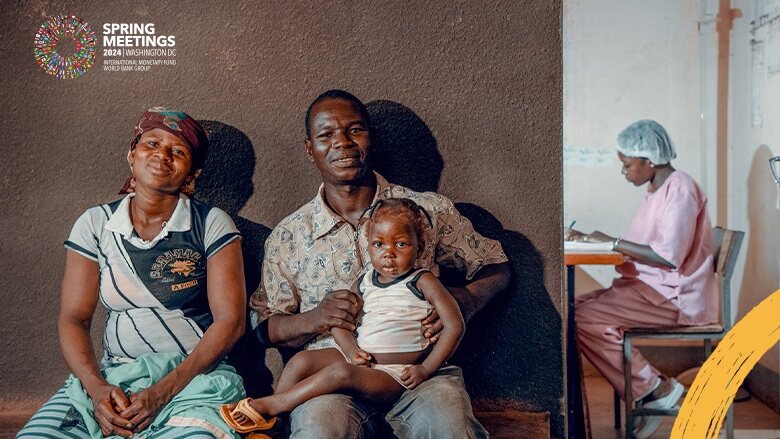
"We will… no longer be targets for extortion." Tamara Izatova, patient's wife, Bishkek Putting an end to extortion Musa Izatov, a 46-year-old patient at the National Hospital in Bishkek is recovering after surgery. He is one of the first to feel the benefits from the healthcare reforms introduced by the Kyrgyz Government.
His wife Tamara is relieved. "Now I don't have to worry about who and how much to pay to make sure we get good treatment," she says, welcoming the increase in transparency. Rampant callousness and greed Tamara Izatova recalls the callousness and greed of local doctors brought on in part by their low and often unpaid salaries. She says her husband was misdiagnosed last year, and she had to pay a large amount of money to a surgeon to get proper medical attention. To make matters worse, the hospital had no bandages or medicines and she had to buy everything on her own. Izatova says that after Musa's eight-hour surgery, the doctors didn't see him and there was virtually no postoperative care. As a result, Musa's condition deteriorated and he had to be rushed back to the operating room. When Musa failed to improve, he was sent home—and Tamara was told her husband would probably die in a few days. "They mutilated my husband," she recalls. "Their incompetence and greed almost killed him." Declining health expenditures hurt poor This time around, Musa and Tamara do not have to pay anything beyond their share of the cost, and they are sure that he will receive proper treatment in future. Orozaly Kochkorov, the head of the hospital's Department of Surgery, operated on him and now Musa is in rehabilitation. The Kyrgyz Republic's faltering economy has caused the share of health care in the state budget to decline steadily since the beginning of the 1990s—from 4 percent of GDP in 1995 to 1.8 percent in 2001. With resources scarce, doctors and other hospital staff resorted to charging patients informally. These payments are now equal to the entire state's health budget. This means that half of the nation's health care revenue is off the books. And the poor people have suffered the most, especially those living in remote areas of the country. Protecting the poor from extortion To improve the situation, the Kyrgyz government has initiated countermeasures such as the Health Sector Reform Project, funded by the World Bank. The reforms promise to protect vulnerable citizens who make up more than half the country's population. These include pensioners and veterans. Reforms aim to protect them from extortion by providing for regular inspections of medical facilities, and fines on hospitals and individual doctors if evidence of wrong-doing is found. Health care now more transparent, accessible and affordable So far, reforms have improved the accessibility and transparency of health care, and have made medicines and meals in inpatient facilities available and more affordable. In addition, the salaries of doctors in inpatient facilities have gone up by 70 percent, while those in outpatient facilities have risen by 30 percent. Under the new payment policy, 60 percent of the patients' payment is spent on drugs, 20 percent on additional salaries for doctors, 15 percent on food, and 5 percent on hospitals' internal needs—such as buying bed sheets, replacing worn furniture, and most important, keeping medical equipment up to date. "We will get good treatment, care, and food." As a result of the reforms says Tamara Izatova, " We will not only get good treatment, care, and food, but will no longer be targets for extortion either. I am confident that doctors will now be accountable for diagnoses and treatment."
Transparency in health systems is an important step toward protecting patients’ rights and access to health care. It is also important to increase citizens' awareness about reform and about their rights and responsibilities concerning their health care. |