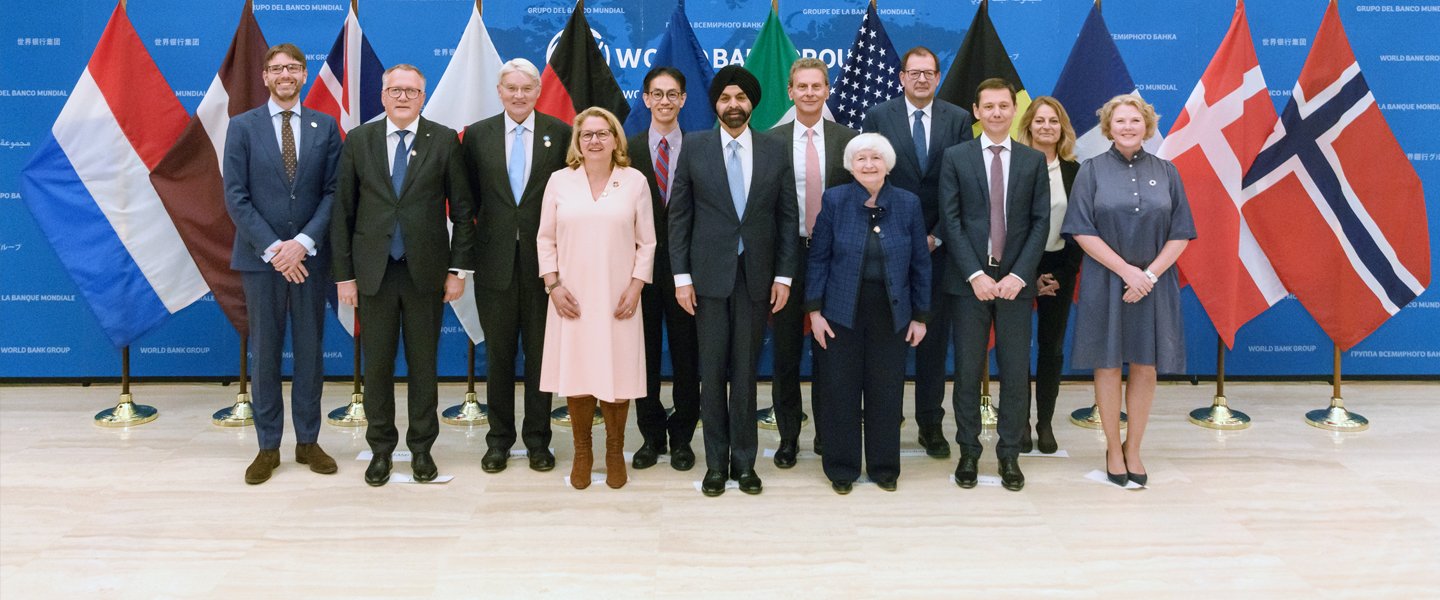
The United States is the World Bank Group's largest shareholder. Through the World Bank Group, the United States participates in addressing key international development challenges of vital importance. The U.S. has a long history of generously supporting the Bank Group's mission and has been a champion of the Bank Group's low-interest loans, interest-free credits, and grants to developing countries for education, health, infrastructure, communications, and other purposes. In order to deepen public understanding of the Bank Group's work in the United States, and to ensure that American concerns are reflected in the Bank Group's policy discussions, the Office of the United States Executive Director and the Bank Group's North American Affairs Team meet regularly with nationally based constituencies in the United States, including government officials, Members of Congress, and staff. The Office of the United States Executive Director handles the diverse interests of the U.S. and channels the United States' unified policy advice to the World Bank's senior management.  Currently, the Executive Director for the U.S. is E. Whitney Debevoise. The North American Affairs Team facilitates the World Bank's relations with the United States by: - Serving as the main point of contact for U.S. Government inquiries.
- Gathering and disseminating information related to World Bank operations and country-specific projects.
- Organizing meetings, seminars, and conferences which bring together American constituencies and Bank managers and staff.
The relations between the World Bank and the U.S. Government can be divided into two types: Executive Relations
The United States Secretary of the Treasury, the Honorable Timothy F. Geithner is the United States' Governor for the World Bank. Secretary Geithner is responsible for the management of the United States’ interests in the institution, exercising his influence by exchanging views with his fellow Governors on the occasion of Annual and Spring Meetings of the Board of Governors and of the Development Committee, as well as by engaging in direct discussions with the President of the World Bank. The Under Secretary of State for Economic, Energy and Agricultural Affairs serves as the United States’ Alternate Governor for the World Bank. Ambassador Robert D. Hormats has served as Under Secretary of State for Economic, Energy and Agricultural Affairs since September 2009. The Governor delegates day-to-day handling of the United States' diverse interests at the Bank to the Executive Director for the United States. The U.S. Executive Director is an employee of the U.S. Department of Treasury and is supported by an Alternate Executive Director for the United States, as well as a team of advisors representing different executive branch agencies. The Department of the Treasury coordinates input from other Departments and channels the United States' unified policy advice through the U.S. Executive Director to the World Bank's senior management. Congressional Relations: Senate and House Participation
U.S. Senate The U.S. Senate Committees listed below affect U.S. development policy and the World Bank. Senate Appropriations Subcommittee on Foreign Operations The Senate Appropriations Committee (specifically, the Subcommittee on State, Foreign Operations, and Related Programs) has the most significant impact on the U.S. contribution to World Bank programs such as the International Development Association (IDA) and the Global Environment Facility. This subcommittee drafts the U.S. foreign assistance bill, and, while the funds recommended for each program can be subsequently amended by the full Committee or on the House or Senate floor, the initial recommendations of the subcommittees are key in the appropriations process. For more information, please visit the Senate Appropriations Subcommittee on Foreign Operations. Senate Committee on Foreign Relations Before an appropriation can take effect there must be an authorization for the appropriation. Typically, the authorizing legislation is written and brought to the respective houses by separate authorizing committees. In the Senate, the authorizing committee for Bank programs is the Foreign Relations Committee. The responsibility of this Committee is to establish the ceiling for funding the programs by the Appropriations Committees, and to establish the policy framework for the programs. In recent years, the authorizing committees have not been as successful in bringing authorizing legislation to the House and Senate floors. As a result, the Appropriations Committees have authorized as well as appropriated funding in their bills, usually after consulting with key legislators on the authorizing committees. Nevertheless, the authorizing committees and their staff are instrumental to the appropriations process, often holding hearings on Bank issues or weighing in on particular concerns. For more information, please visit the Senate Foreign Relations Committee website. U.S. House The U.S. House Committees listed below affect U.S. development policy and the World Bank. House Appropriations Committee The House Appropriations Committee (specifically, the Subcommittee on State, Foreign Operations, and Related Programs) has the most significant impact in the House on the U.S. contribution to World Bank programs, such as the International Development Association (IDA) and the Global Environment Facility (GEF). This subcommittee drafts the U.S. foreign assistance bill, and, while the funds recommended for each program can be subsequently amended by the full Committee or on the House or Senate floor, the initial recommendations of the subcommittees are key in the appropriations process. Fore more information, please visit the House Appropriations Subcommittee on Foreign Operations website. House Committee on Financial Services Before an appropriation can take effect there must be an authorization for the appropriation. Typically, the authorizing legislation is written and brought to the respective houses by separate authorizing committees. In the House, the authorizing Committee for the Bank's programs is the House Financial Services Committee. The responsibility of this Committee is to establish the ceiling for funding the programs by the Appropriations Committees, and to establish the policy framework for the programs. In recent years, authorizing committees have not been as successful in bringing authorizing legislation to the House and Senate floors. As a result, the Appropriations Committees have authorized as well as appropriated funding in their bills, usually after consulting with key legislators on the authorizing committees. Nevertheless, the authorizing committees and their staff are instrumental to the appropriations process, often holding hearings on Bank issues or weighing in on particular concerns. For more information, please visit the House Committee on Financial Services website.Â
|