|  |
Among the three dimensions of municipal management—planning, finance, and service provision— finance yielded successful results. The Bank should continue to support tightened municipal financial management, own-revenue raising by municipalities, and municipalities being brought to local credit markets when appropriate conditions are present. |
| World Bank’s municipal development projects (MDPs) can be wholesale, serving seven or more municipalities, or retail, serving six or fewer municipalities. Wholesale MDPs have yielded better outcomes than retail MDPs over the past decade, but more analysis is needed. Retail MDPs might perform better if they incorporated more of the winning elements of wholesale MDPs, such as performance-based incentives and a focus on finance. |
| Project documentation that routinely reports basic data about each client (municipality name, population, and MDP investment) is vital to developing a better understanding of the scope of MDP results. For instance, as part of the World Bank’s project, Chile launched and consolidated the National System for Municipal Information (SINIM). Click here to learn more about MDP in Chile. |
|  Wholesale MDPs have yielded better outcomes than retail MDPs over the past decade, but more analysis is needed. Retail MDPs might perform better if they incorporated more of the winning elements of wholesale MDPs, such as performance-based incentives and a focus on finance. |
|  More frequent use of cost-benefit or cost-effectiveness analysis would help MDPs’ municipal clients select the best investments and achieve outcomes efficiently. IEG found that only half of MDPs use such tools, with the best coverage in the Sub-Saharan Africa Region. |
| Municipalities can mobilize their revenues by updating tax records, expanding the cadastres or land registers, and enhancing control over tax rates and collections. One of the successful examples is the World Bank’s project in Tunisia, where participating municipalities were able not only to increase their revenues but also to have surpluses twice the target. Click here to learn about MDPs in Tunisia. |
|  For monitoring and evaluation (M&E) to succeed in MDPs, it has to be useful and not unduly burdensome to municipalities, and it must keep a focus on achieving results, particularly for the poor. M&E can be strengthened with the availability of baseline data and explicit, preferably quantified, targets. Strong M&E can help reduce the expense of cost-benefit analysis by providing some of the data needed to estimate economic rates of return. A successful case is in Kazan, in the Russian Federation, where information gathered through M&E was useful for the municipality’s own financial management purposes. Click here to learn about MDP in Kazan, Russia. |
| Private financing of municipal services can be encouraged through better analysis of local financial markets and deeper understanding of demand, which may help municipalities gain the trust of private investors. Municipalities can also improve their financial management by computerizing and systemizing municipal accounts and providing staff training. Click here to read more about the MDP in India. |
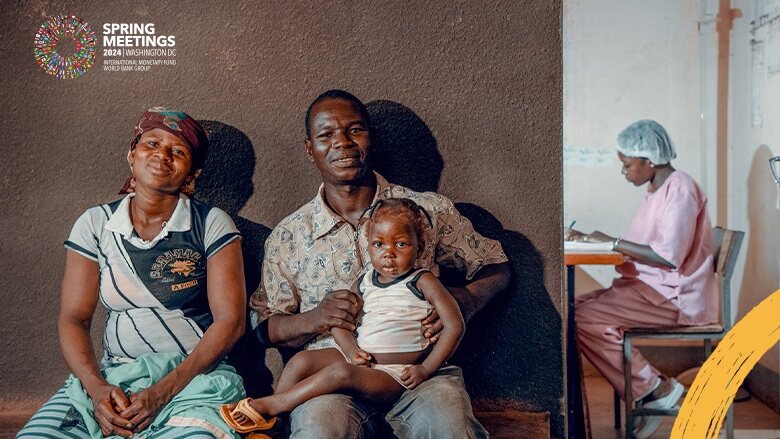
|  There is little evidence that stronger municipal management benefits the poor. MDPs need to give much more attention to poverty reduction in defining their objectives, showing how the poor would benefit from municipal investments and how services would improve for them. The Gambia MDP, which actually included poverty alleviation in its project title, benefited poorer, unskilled construction workers and created. Click here to read about the MDP in Gambia. |
|  |

|  74% of completed MDPs were rated "Satisfactory" or better. |

| From fiscal 1998 to 2008, the Bank committed $14.5 billion, 3.4 percent of its total lending, to 190 MDPs. The projects have assisted nearly 3,000 urban municipalities—about 15% of all those in developing countries, more than a third of which are in the Latin America and the Caribbean Region.
The level of MDP support to an individual municipality has varied enormously, from tailor-made technical assistance and significant investment funding to training just a few municipal staff. Up to 345 million people—IEG’s estimate for the entire population of the 3,000 participating municipalities— might have benefited.
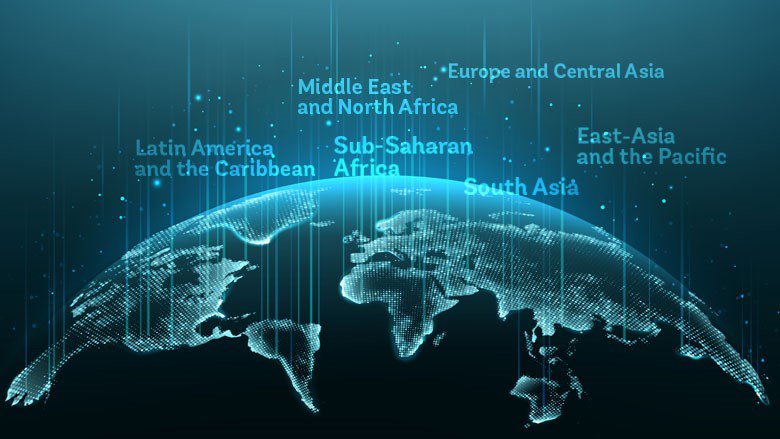
MDPs by region -----------
|
|
|  |
IEG Ratings for Bank-Financed MDPs IEG reviewed 190 municipal development projects around the world for this evaluation.
For a list of the municipal projects and information on each project, including IEG ratings, click here. |
|