Click here for search results
Online Media Briefing Cntr
Embargoed news for accredited journalists only.
Login / Register

The World Bank Examines the Development Implications of Gender-Based Violence

Women attending Sunday mass in Timor-Leste.
Women attend Sunday mass in Timor-Leste.

December 7, 2004—The global community observed the International Day for the Elimination of Violence Against Women, on November 25. On this day the World Bank expressed its commitment, in partnership with other organizations to fight the scourge of violence based on gender, in a letter to the heads of key multilateral organizations.

Just two weeks prior to this, the World Bank  held a one-day workshop, titled The Development Implications of Gender-Based Violence, at headquarters in Washington, DC. It was organized by the Gender Unit of the Poverty Reduction and Economic Management Network, along with other networks and regions within the Bank. The purpose of the workshop was to raise awareness among Bank staff about the prevalence and development implications of this global problem. Here, staff and experts not only shared knowledge, but tried to explore what the Bank can do to address this issue in its own operational work.

Present at the event were experts such as Mrs. Mary Robinson, Director of the Ethical Globalization Initiative and Former UN High Commissioner for Human Rights, government policy makers, members of the judiciary, key international organizations such as the World Health Organization, with policy, research, and operational experience in the area, and World Bank President, James D. Wolfensohn.

“This is a development problem, a moral problem, and an ethical problem. It is a problem that attacks the very essence of family life because it also affects the children—the next generation. And so it is, that we at the Bank are trying now to see just what we can do in this difficult area,” Mr. Wolfensohn stated before a packed auditorium.

Mrs. Mary Robinson then acknowledged “the significant progress the World Bank has made in recent years in mainstreaming a gender perspective throughout its activities.” She then touched on the economic cost of gender-based violence, before delving into the main focus of her speech; human rights and why this issue is important to World Bank professionals.

“There are three main reasons why gender-based violence is of the utmost priority,” she said. First, “it is simply the most virulent form of gender inequality.” According to Robinson, despite deadly conflicts within a country, it is within the home that the personal security of many women is at risk. She pointed to the disturbing statistic that one in three women in the world has suffered some sort of violence at the hand of an intimate partner.

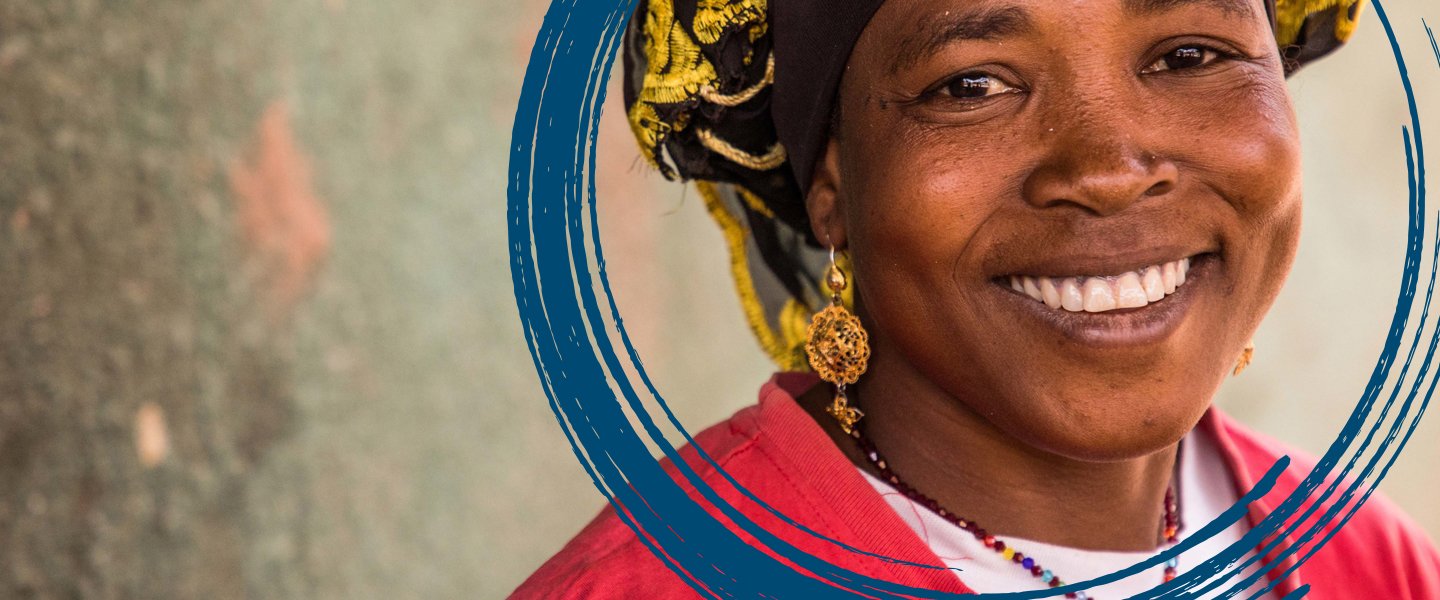
Senegalese woman.
Senegalese woman.

Second, she added that it is important for World Bank staff to understand how gender violence can exacerbate many development and human rights problems using the HIV/AIDS example to prove her point. “According to UNAIDS, ‘HIV-positive women were found to be 10 times more likely to have experienced male violence than those that are HIV-negative,’” she noted.

Finally, Mrs. Robinson noted that an analysis of gender-based violence highlights the utility of rights-based approaches. She pointed to two projects, one in Ecuador and one in Uruguay, in which the Bank has already taken steps in this direction by explicitly addressing this issue through the provision of resources such as legal aid to poor women, and technical assistance and training to help countries implement international, regional and domestic law pertaining to gender-based violence. Although the ultimate success of these programs are not yet known, such initiatives areimportant steps for countries such as Uruguay, where one in nine women die as a result of domestic violence (National Directorate for the Prevention of Crime).

It is because of these links between gender inequality, violence and poverty that the World Bank is seeking to raise awareness. Staff increasingly recognize that reducing vulnerability and enhancing the ability of people to take charge of their own lives are essential for poverty reduction.

To mark the International Day for the Elimination of Violence Against Women , James Wolfensohn also sent a message, reiterating his support for combating gender-based violence, to the heads of other multilateral development Banks and the United Nations. In his letter, he drew on the experience of the November 9 workshop held at the Bank.

“The workshop made it clear that violence against women exacts enormous costs to economies, to women’s health, and to women’s rights, and that we need to join forces to combat this pressing development concern,” he wrote. “The World Bank applauds the leadership that other development agencies have shown on the issue. We are strongly committed to partnering with these agencies, and with governments and civil society, to end violence against women. Women should no longer have to live in fear, their children should no longer witness daily acts of violence, and men should enjoy the dignity and freedom from want that enables them to use peaceful means to resolve conflicts. We look forward to building collaborations with our partner organizations to fight the scourge of violence against women.”

To view the video of the conference, please click here.

For more information on the World Bank’s work on gender and development, visit http://web.worldbank.org/gender/.

For more information about the World Bank's work on Gender in Latin America & the Caribbean, please visit http://www.worldbank.org/lacgender.

For information on the World Bank’s most recent work to combat gender-based violence in Uruguay, please visit http://wbln1018.worldbank.org/LAC/LAC.nsf/ECADocByUnid/725CCCFBF259C1DB85256F4A00781E1F?Opendocument.


Permanent URL for this page: http://go.worldbank.org/IBTWIQBVN0