
Click here for search results
Online Media Briefing Cntr
Embargoed news for accredited journalists only.
Login / Register

Water Problems, Poverty Linked

World Bank Report: Lack of Infrastructure Holding Back Developing World
Available in: العربية, Español, 中文, Français, русский
Resources
Official Bank Web Sites
The World Bank at the 4th Water Forum
Water Resources Management
Water Supply and Sanitation

Related Information
Allies Fighting Corruption in Water Sector
Water Services Innovations Competition
Press Release: Increased Efforts to Reach Water Security
Press Release: Global Food Crisis can be averted
World Water Forum Focuses on Vital Resource
Water Fair Publications
Fourth World Water Forum
Water Feature Stories
Water Forum Blog

March 17, 2006—Too much or too little water can spell disaster in the world’s poorest nations.

Heavy rains triggered landslides in the Philippines last month, obliterating a village of 1,800 people.

Severe drought in Africa and resulting food shortages threaten the lives of millions. In Kenya, fighting has broken out over scarce water and pastures.

Extremes in water supply deliver unacceptable shocks to the developing world, says World Bank Senior Water Advisor, David Grey.

Monsoons, droughts, depleted groundwater resources, and typhoons devastate poor countries because they’re in too deep a hole economically to reduce their risk, he says.

“This is a very serious situation, and getting worse,” says Grey, a member of a Bank delegation to the Fourth World Water Forum in Mexico City, March 16-22.

The world’s poorest countries need help to turn the situation around, say Grey and Bank economist Claudia Sadoff in their paper, Water for Responsible Growth, whose release coincides with the water forum.

The help needed includes financing—public and private—to promote responsible water development in the neediest countries and reduce poverty.

“This is not an ideological debate—the issue is to mobilize the resources to do this,” Grey says.

Serious Situation

More than a billion people do not have access to clean water.

Already one billion people worldwide don’t have access to safe water.

In Latin America alone, about 15 percent of the population—roughly 76 million people—lack safe water, and 116 million don’t have access to sanitation services, says Kathy  Sierra, the Bank’s Vice President for Infrastructure and leader of the delegation to the World Water Forum.

Her message is lack of water infrastructure is holding back the developing world.

In Ethiopia, the country’s growth and development potential is directly tied to rain. Even a single drought can cut growth potential by 10 percent over an extended period, and historical levels of variability appear to diminish growth potential by over one-third.

Yemen is dependent entirely on rainfall, groundwater and flash flooding for water and does not have effective institutions to manage one of the world’s most severe water crises As a consequence, diminishing water supplies threaten to displace populations.

In Kenya, the La Nina drought of 1998-2000 and El Nino floods of 1997-98 caused the GDP to fall by 16 percent and 11 percent, respectively. Industry suffered 58 percent of the total losses.

These stories of Ethiopia, Yemen and Kenya are all described in “Water Country Assistance Strategies” prepared by Bank teams.

Water and Growth

Rich nations harnessed water early in their development and turned water into an engine for growth, say Grey and Sadoff. Blessed with generally milder climates and well-established water infrastructures, developed countries can absorb even terrible water-related events, such as Hurricane Katrina.

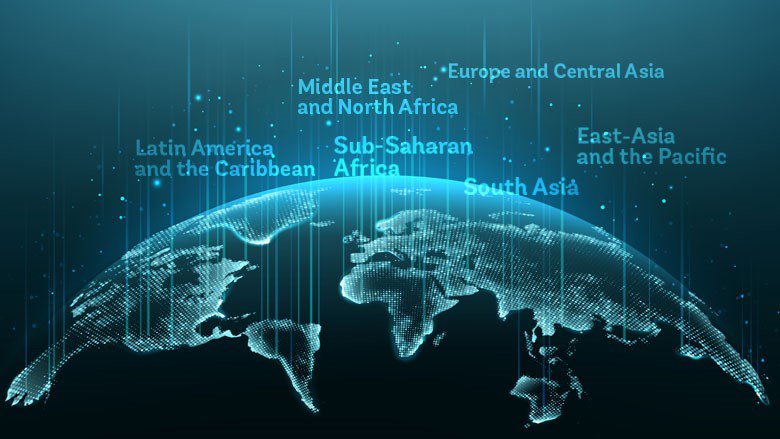
By 2035, as many as three billion people may live in areas with severe water shortages, especially if they live in Africa, the Middle East, or South Asia, predicts the World Bank.

Grey and Sadoff say developing countries need this kind of “water security”—reliable water supplies, and acceptable risks from floods and other unpredictable events, including those from climate change.

But developing nations are caught in a catch 22. They don’t have money to build infrastructure or improve water management needed for water security, and they don’t have the water security that would help them grow and generate wealth for infrastructure projects.

Grey and Sadoff see a strong link between the sophistication of a country’s water management and its economic health. Investors avoid countries with unpredictable food production, health problems related to poor water quality, and unreliable electricity supplies. Investment doesn’t flow to places where catastrophic water events cause huge social and economic problems and large-scale losses of life, they say.

Investment Needed

Grey and Sadoff pinpoint four ways that investments in both water management and infrastructure can help reduce poverty in the developing world:
• River regulation and water storage, both natural and man-made
• Water resource projects aimed at the poor, such as restoring degraded water catchment areas in poor regions
• Broad-based water service projects that, for example, improve the performance of water utilities
• Initiatives directly benefiting the poor, such as projects providing water, sanitation and irrigation

Grey and Sadoff expect costs to be “truly daunting,” with the least developed countries facing the biggest challenges from nature. Any approach, they say, should be customized by country, and promote “the right mix of infrastructure and good management.”

Sierra urged World Water Forum delegates to forge and strengthen partnerships among donor countries, developing country governments, the private sector, and local communities.

“If they succeed, the rewards for the world’s poor will be immense,” she said.


Permanent URL for this page: http://go.worldbank.org/129ZZ4KIO0