Partnerships are critical to success in Fragile States
The World Bank is committed to strengthening partnerships and sharing expertise and resources to increase aid effectiveness in fragile states and move the Fragile States agenda forward.Collaborating with other international partners on harmonization and coordination efforts, joint programs, shared results and Multi-Donor Trust Funds are crucial for overall effectiveness at both policy and country levels in fragile states. Multilateral OECD-DAC FSG The Bank co-chairs the OECD-DAC Fragile States Group (FSG), which has an intensive on-going work program to build policy consensus on the international response to fragile state and conflict affecetd situations. · In January 2005, a Senior Level Forum (SLF) on Aid Effectiveness in Fragile States (co-sponsored by the Bank, OECD-DAC, the European Commission (EC) and United Nations Development Programme (UNDP)) brought together senior officials, leading development practitioners, government reformers in fragile states, and academics, to examine aid allocation to fragile states, donor coordination, donor policy coherence, effective service delivery and improved aid instruments. · At the SLF, the participants agreed to develop a set of Principles for Good International Engagement in Fragile States. The Principles reflect a broad consensus that state-building is the central objective in fragile states, and that effective donor programs require integrated approaches across the political-security-development nexus, fast and flexible responses and long-term engagement. · At the subsequent High-Level Forum (HLF) in Paris, March 2005, development ministers and agency heads agreed to pilot these principles in a number of countries. Pilots for the principles were conducted in nine countries, were then revised in November 2006, and have been formally adopted by the HLF in April 2007. · The OECD-DAC FSG also has an on-going work program on service delivery and whole of government approaches which the Bank is supporting.
The Bank has also worked with OECD/DAC and other donors to establish a Learning and Advisory Group (LAP) to share ideas, research, and lessons learned on fragile states. The United Nations (UN) · Coordination with other donors on fragile states has been further enhanced at the policy and operational levels through collaboration with partners such as the The United Nations Department of Peacekeeping Operations (DPKO), The United Nations Development Group(UNDG) and the OCHA on mechanisms to better coordinate post-conflict recovery processes and frameworks, including an intensive investment in 2006 in a joint review with the UN of the Post Conflict Needs Assessment (PCNA) process and tools. · Since then the Bank and UNDP have collaborated on a shared program to pursue country-based experiential learning on state-building, as well as lessons for state-building from post conflict needs assessments and peace agreement negotiations. In January 2006, the Bank organized a one day learning event for Bank staff: “State-Building: Policy and Practice in Fragile States”. · The event was designed to bring the Bank practitioners up to date with the latest thinking on state-building from academia, government and the policy-world through a series of presentations and discussions. Bank staff thought through the logic of states’ primacy in state-building exercises; the characteristics of successful institution-building and two important components of state-building strategies: public financial management and judicial reform. · The United Nations Development Programme (UNDP) The Bank has been an active player in the ongoing policy debate around state-building policy and practice. Together with the UNDP, the Bank convened in September 2005 a group of reformers and policy-makers from post-conflict situations in Africa, Central America, Eastern Europe and Central Asia. · Participants discussed the emerging policy agenda in a range of areas, with particular emphasis on prioritizing state functions in post-conflict settings, the consequences of conflict for state formation, the importance of national leadership and national capacities during transition and the controversial role of international support in post-conflict settings. · In 2004-2005, the Bank collaborated with the UN Office of Drugs and Crime on a program of activities at both the country and sector level, sharing research work on a range of topics linked to drugs, crime and development. The Multilateral Development Banks (MDBs)
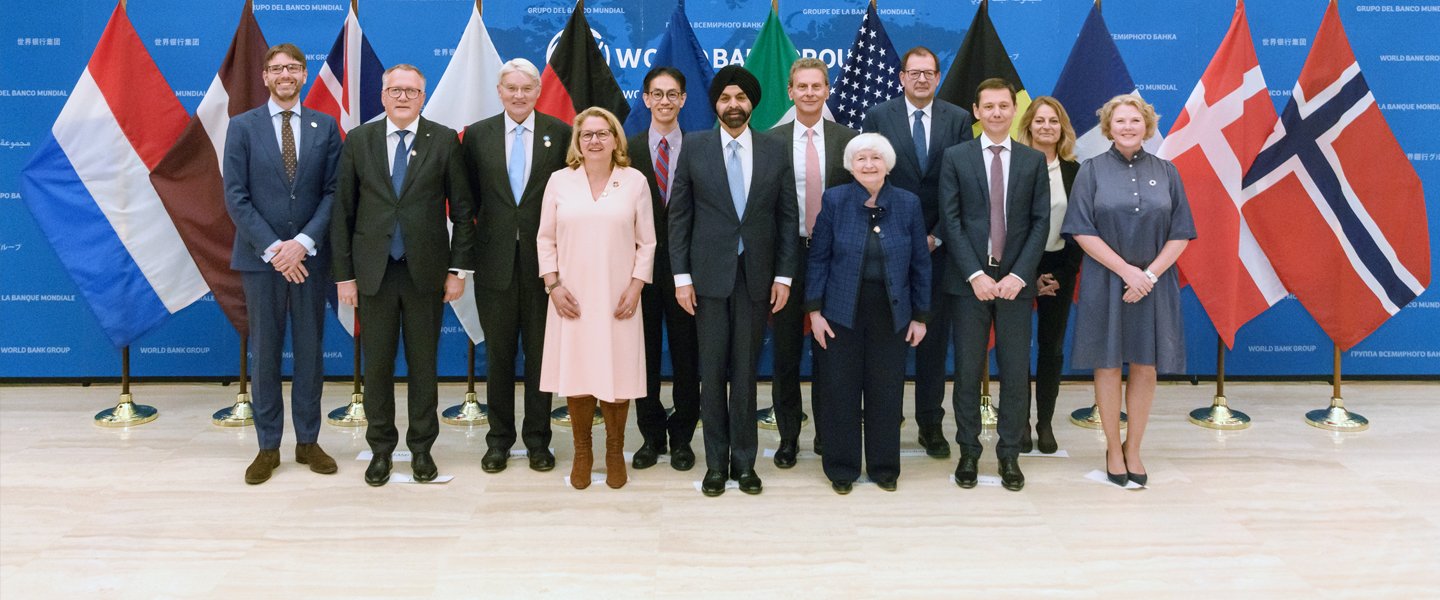
At the Annual meetings of the World Bank and IMF in October 2007, the Head's of the Multilateral Development Banks (MDBs) and the IMF, issued a statement on deepening their collaboration in fragile situations. The statement drew on the recommendations of the Working Group of the MDBs plus the IMF, set up in March 2007, whose final report presented an agreed set of goals, principles, operational approaches, and working arrangements for strengthening their engagement in fragile and conflict situations. Development Banks Commit to Closer Collaboration Working in Fragile Situations
Report of the MDB Working Group: Toward a More Harmonized Approach to MDB Engagement in Fragile Situations
The European Commission (EC) The European Commission (EC)
The Inter-Agency Standing Committee (IASC) The Inter-Agency Standing Committee (IASC) is a key mechanism for inter-agency coordination of humanitarian assistance. The forum involves both UN and non-UN humanitarian partners. The IASC was established in 1992 in response to United Nations General Assembly Resolution 46/182 on thee strengthening of humanitarian assistance. |