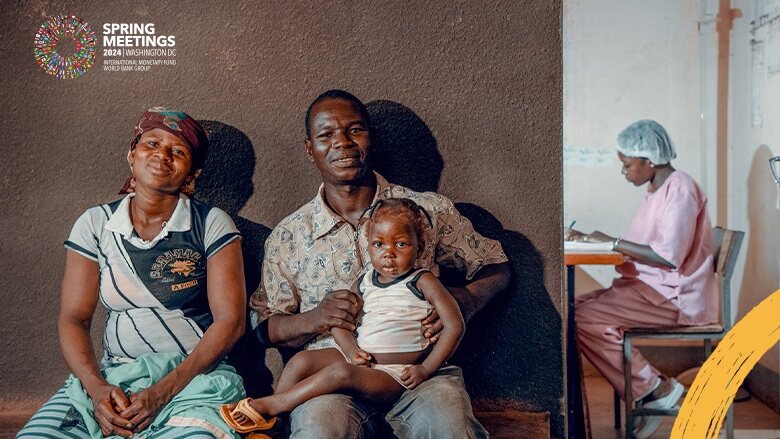
Addressing malnutrition (under and over-nutrition), and micronutrient deficiencies, which are linked to - high child and maternal mortality rates (involved in more than 50% of child deaths)
- poor educational outcomes and lower productivity, and
- high morbidity and mortality from infectious and non-communicable diseases,
is central to the World Bank's strategy to support country efforts to reduce poverty and achieve the Millennium Development Goals (MDGs). In the past, malnutrition was a term mainly associated with a lack of food, insufficient dietary diversity, and poor health care that led to micronutrient deficiencies, wasting and stunting, and death. These are still leading nutritional problems in large parts of the world. Yet, as more countries become industrialized, malnutrition due to diets containing too many calories and saturated fats, and a more sedentary lifestyle, is increasing rapidly. The consequences are devastating, compromising quality of life, increasing health care costs and causing premature death due to chronic diseases. The issues that affect food consumption, including individual and household behavior, marketing, policymaking and political choice, and the incentives that influence choices are complex, and vary among countries and cultures. While there is still a window of opportunity to slow down or reverse these dietary trends, it is imperative that we identify and address the root causes of the problem. Malnutrition remains widespread. For example: - Annually, 30 million infants (approximately 82,000 per day), are born with intra-uterine growth retardation (IUGR), mainly due to poor maternal nutritional status
- 1 in 3 children under five in the developing world are stunted (nearly 182 million)
- More than 250 million children under five are affected by sub-clinical Vitamin A deficiency
- More than a billion people are at risk of iodine deficiency disorders
- An estimated 3.5 billion people are affected by iron deficiency and anemia.
In most regions, nutrition rates are slowly improving, but in Eastern Africa, malnutrition rates and absolute numbers are increasing -- from 22 million malnourished children under five in 2000, to a projected 24 million in 2005. Malnutrition is still, by far, the most important risk factor globally contribution to the Burden of Disease, with the poor being disproportionally affected: Burden of Disease due to Selected Risk Factors, 1995 
The gains from malnutrition reduction are substantial. In Pakistan, school enrollment rates increased substantially (2% for boys, 10% for girls) with a relatively small improvement in height for age. Addressing vitamin A deficiency can reduce mortality among children under six by nearly 23%. Universal salt iodization can eliminate the severe mental retardation associated with iodine deficiency, and can add as many as 11IQ points, on average, to every person in a country. Giving iron to children aged 6-24 months will help prevent cognitive changes that reduce school performance. Nutrition education, Vitamin A supplementation and breast feeing promotion are among the most cost-effective public health interventions, in terms of disability adjusted life years (DALYs) gained. Child nutritional status is a key poverty indicator, and is included in global MDG monitoring efforts. The Bank supports analytical work to inform policy dialogue on economic and social policy approaches in support of improved nutrition, including providing guidance on how to integrate nutrition into poverty reduction strategies. The Bank also provides investment finance - close to $2 billion since 1986 - through programs and projects in health, education, social protection and other sectors, and for community-based programs implemented through public institutions or non-governmental organizations. The emphasis in these programs is on empowering households to provide adequate care for young children and their mothers, improve dietary practices tat all stages of the life cycle, including micronutrient intakes, and to strengthen household health and hygiene practices. Success is measure through impact on household and service provider practices, and nutrition and health outcomes. Consequently, there is a strong focus on strengthening monitoring and evaluation in Bank-supported nutrition activities. |