Click here for search results

Community-Driven Development


Main text

English (418kb)


Related websites

World Bank Social Development Website

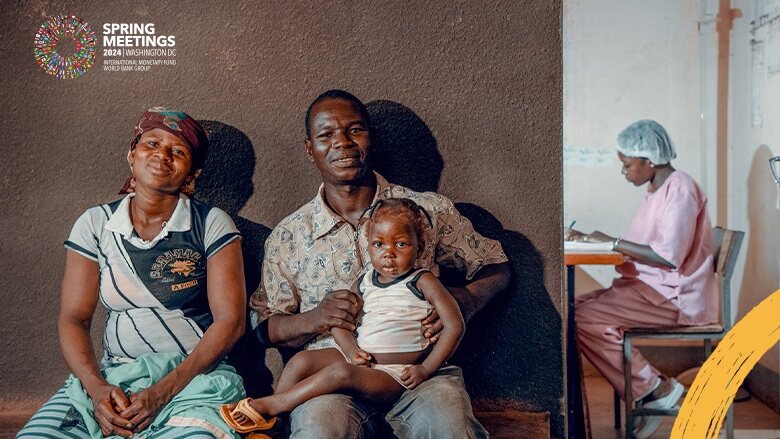
Community-driven development (CDD) gives control of decisions and resources to community groups. CDD treats poor people as assets and partners in the development process, building on their institutions and resources. Support to CDD usually includes strengthening and financing inclusive community groups, facilitating community access to information, and promoting an enabling environment through policy and institutional reform. Experience demonstrates that by directly relying on poor people to drive development activities, CDD has the potential to make poverty reduction efforts more responsive to demands, more inclusive, more sustainable, and more cost-effective than traditional centrally led programs. CDD fills a critical gap in poverty reduction efforts, achieving immediate and lasting results at the grassroots level and complementing market economy and government-run programs. With these powerful attributes, CDD can play an important role in strategies to reduce poverty.

This chapter examines why and how governments can support CDD, synthesizing lessons learned from accumulated experience. The chapter is based on extensive consultations with lead practitioners—both within and without the World Bank—as well as a literature review and an analysis of 12 large and successful community-driven programs covering a variety of sectors and regions.

The chapter aims to introduce policymakers to the benefits and relevance of CDD by providing useful guidelines for designing CDD programs. It commences by asking the question “What is CDD?” then defines the concept of CDD, outlines its key components, and describes contexts in which CDD approaches might be relevant. Section 9.3 focuses on the advantages of using CDD approaches for sustained poverty reduction, touching briefly on the risks inherent in adopting CDD strategies (these risks, and mitigation measures therefore, are dealt with in more detail in section 9.7: "Principles for Sustainability and Effectiveness").

Governments have a range of institutional options for supporting CDD. Although communities will always drive the process, they may receive support from a variety of actors, including local or municipal government, the private sector, civil society, and central government. Section 9.4 examines three broad sets of arrangements for CDD: partnerships between community-based organizations (CBOs) and local or municipal governments, partnerships between CBOs and private support organizations such as nongovernmental organizations (NGOs) or the private sector; and direct partnerships between CBOs and central government or a central fund. This section discusses key design principles specific to each of the arrangements, as well as considerations for selecting the right arrangements in different country contexts. Section 9.5 outlines the benefits of multisector and single-sector approaches to CDD to guide practitioners in their selection between these alternatives.

Although there is growing evidence that CDD offers an effective means of improving the efficiency of public financing, even in optimistic scenarios, the financing requirements to improve poor people’s access to basic services far outstrip the availability of public funds. It is thus important to leverage local and private financing sources in implementing CDD. The uses of community contributions, credit financing of community contributions, and private commercial investment are discussed in section 9.6. The chapter concludes, in section 9.7, with a discussion of key principles for the effectiveness and sustainability of CDD, including design guidelines, tips, and tools for implementation.

PREVIOUS CHAPTER | NEXT CHAPTER


Cross-Cutting Issues:
Participation Gender
Governance  Environment
Community-Driven Development Strategic Communication in PRSP


Permanent URL for this page: http://go.worldbank.org/AAWTXQJGU0