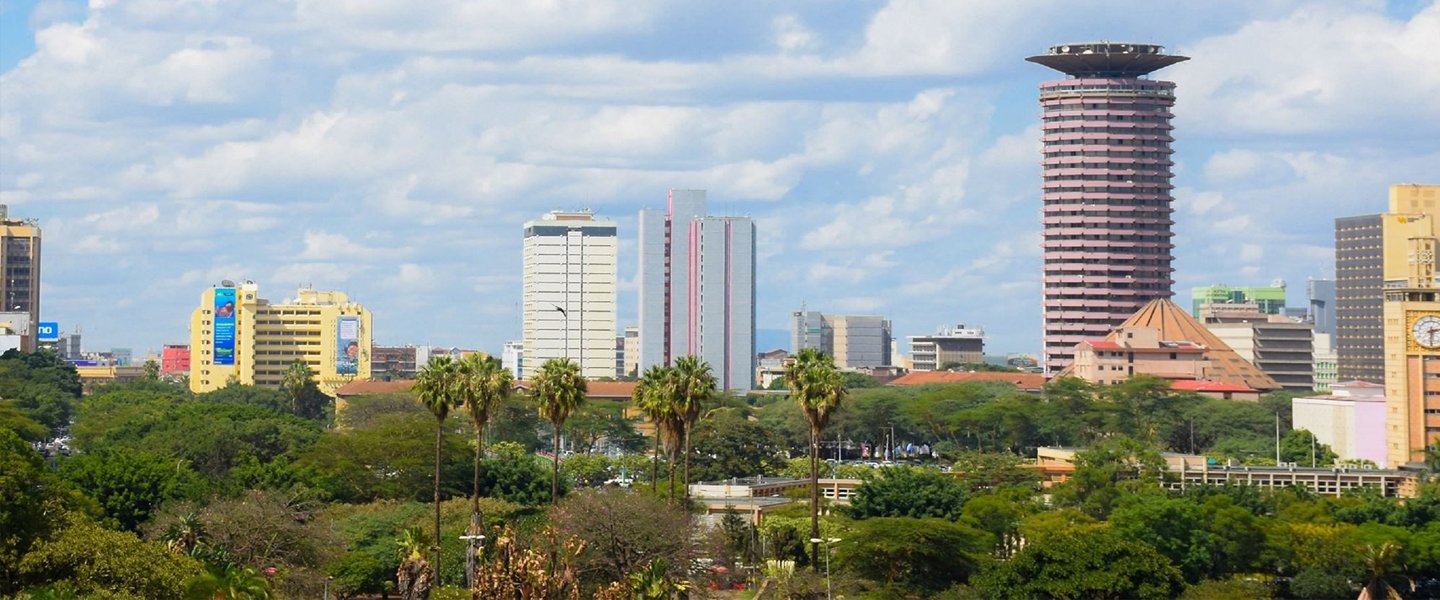
Climate change may be the defining social justice issue of our generation. It brings into sharp relief a vision of a world that is highly polarized - between heavy greenhouse gas-emitting countries and resource-poor countries that will suffer the worst consequences. The rich countries of the world are predominantly responsible for climate change, while poor people in poor countries bear the brunt of its impacts. Learn More
Guided by Social Development Department’s engagement on social accountability, inclusion and cohesion, the Social Dimensions of Climate Change team has developed a two-pronged work program on pro-poor adaptation and social impacts of mitigation, which is conducted through analytical and advocacy work and operational support to regional teams.
LOCAL INSTITUTIONS AND CLIMATE CHANGE The Social Development Department has developed a series of activities focusing on the role of formal and informal local institutions in building territorial resilience and reducing vulnerability to climate change. Click here for more information.
CLIMATE CHANGE AND EQUITY This project aims to unpack and expand our understanding of equity and how it relates to climate change, and to explore its policy and operational implications. The workshops in April and May of 2009 will provide an opportunity to analyze and discuss this theme with policymakers, development practitioners, civil society and academia.
RIGHTS, FORESTS AND CLIMATE CHANGE SDCC has launched a research agenda on the social dimensions of Reducing Emissions from Deforestation and Degradation (REDD) with a view to minimizing adverse social impacts, and fostering benefit-sharing, voice and participation. This work includes collaboration with the Forest Carbon Partnership Facility to integrate social dimensions in Readiness Plans and carbon finance operations. The SDCC Team co-sponsored the Oslo Conference on Rights, Forests and Climate Change together with the Rights and Resources Initiative in October 2008.
SOCIO-ECONOMICS OF ADAPTATION TO CLIMATE CHANGE As part of a global study led by the World Bank, the Social Dimensions of Climate Change team is developing a participatory methodology for identifying robust adaptation options at the local level. The approach, which includes ‘future-visioning’ techniques, is currently being applied in five case study countries - Bangladesh, Bolivia, Ethiopia, Ghana, and Mozambique. Click here to learn more about this study.
LEARNING MODULE ON THE SOCIAL DIMENSIONS OF CLIMATE CHANGE Based on the above projects and other ongoing analytical work, SDCC is developing a learning module that aims to build the capacity of development professionals to engage with and address the social aspects of climate change. The three core components cover social vulnerability to global warming, pro-poor climate action, and social implications of climate policy.
The Social Dimensions of Climate Change (SDCC) team works closely with other teams in the Social Development Department (SDV) as well as other departments and regional units within the World Bank. The following studies on the social implications of climate change are led by other teams within SDV.
Climate Change and Gender Equity: A global review on Gender and Climate Change Adaptation considers the gender and social impacts of climate change and is assembling case studies on adaptation practices that mainstream gender and social dimensions at local, national, and international levels.
Promoting an Indigenous Peoples’ Agenda on Climate Change: The Social Dimensions of Climate Change work program aims to support Indigenous Peoples’ representatives prepare their own roadmap for engagement in the run-up to the UNFCCC’s COP15, recognizing that the agreement to be reached in Copenhagen is of utmost importance for Indigenous Peoples.
Pro-poor Urban Adaptation: A study on pro-poor urban adaptation in low and middle-income countries intends to address this challenge by supporting urban local authorities in developing pro-poor adaptation strategies. Fieldwork will be conducted in Central America and East Africa.
Conflict and Climate Change: A global study on Mapping Areas at Risk of Violent Conflict and Climate Change is assessing possible geographical linkages at the regional and country levels between different manifestations of violence (political violence and civil war, common violence and crime, and domestic violence) and various effects of climate change.
Migration and Resettlement: Based on comparative analysis of country case studies in Argentina, Brazil, Colombia and Guatemala, the study will identify the main lessons learned in the design and successful implementation of resettlement programs for disaster prevention and develop a toolkit for planning and implementing resettlement programs.
Micro-Documentary, Vulnerability Exposed, Film Exhibit during the 10th Session of the Human Rights Council Geneva, Switzerland, March 2-10, 2009
Award Ceremony and Showcasing Event for Vulnerability Exposed: Micro-documentary Film Contest on the Social Dimensions of Climate Change Washington, DC, January 2009 Click here to download the "Vulnerability Exposed" booklet.
Social Dimensions of Climate Change Workshop Report 2008: The main aim of the workshop was to identify and discuss impacts of climate change through a social lens, including potential negative impacts of the emerging climate policy architecture. Building on the platform created by the workshop, efforts are now being made to galvanize an international peer-learning network to take this agenda forward through advocacy, policy analysis and operational work. (PDF 3.1MB)
Robin Mearns leads the Social Dimensions of Climate Change team. He is a geographer with multi-regional research, policy, and operational experience in community-based risk and natural resource management, community driven development, and sustainable land management. He coordinates work across the World Bank on the social dimensions of climate change.
Nilufar Ahmad is leading studies on Gender Dimensions of Climate Change in Bangladesh and Gender Equality, Poverty Reduction and Environmental Sustainability. She leads the social component of the Bangladesh case study for the global report on the Economics of Adaptation to Climate Change. She is developing a strategic framework for mainstreaming gender and environmental issues in the infrastructure sectors. Nilufar chairs the gender group within Sustainable Development Network (SDN) and monitors progress of Gender Action Plan.
Carina Bachofen is a part of the core team working on the social component of the global study on the Economics of Adaptation to Climate Change., with particular responsibility for work in Bolivia and Mozambique. She also supports the work program on equity and climate change, the development of the learning module on the social dimensions of climate change, and analytical work on conflict, migration and gender in the context of climate change in the Middle East and North Africa region.
Mi Hyun Miriam Bae is leading the World Bank Initiative on Direct Engagement with Forests People in Forest and Climate Change Operations with the objective of building the foundation for a permanent mechanism of dialogue with Forests People as well as to incorporate their inputs in World Bank forests and climate change operations. She also works in the application and implementation of social safeguards (Indigenous Peoples Policy and Involuntary Resettlement Policy) in World Bank projects.
Gernot is the focal point for forest carbon/REDD in the team and also works on the role of land tenure and carbon rights in climate change adaptation and mitigation. His professional background is in natural resource management, with an emphasis on institutional and governance analysis.
Edward Cameron is coordinating work on equity and human rights. This work looks at the international climate change policy process and explores ways in which processes and outcomes can be improved for vulnerable and marginalized communities. He is leading the preparation of a learning module on the Social Dimensions of Climate Change.
Elena Correa is a psychologist and regional development planner with extensive experience on social impact assessment and the management of development projects, mainly in the infrastructure sectors. She is leading the Social Development Department’s work on involuntary resettlement caused by development projects, natural disasters and conflict, including resettlement associated with climate-related hazards.
Rasmus Heltberg administers the Trust Fund for Environmentally and Socially Sustainable Development (TFESSD) which funds a good deal of the World Bank’s ongoing work on adaptation to climate change. He also works on social policies and social protection for promoting pro-poor and participatory adaptation to climate change, and is the Social Development Department’s focal point for the Development Marketplace 2009 on climate change adaptation.
Minna Kononen works on series of studies focusing on the role of local institutions in climate change adaptation in Africa and Latin America, including area-based development approaches and costing of local adaptation options based on the role of local institutions.
Anne Kuriakose is coordinator of the social component of the Economics of Adaptation to Climate Change study. An economic sociologist by training, Anne holds expertise in local economic development, rural institutions and natural resource management. She is responsible for the provision of direct technical assistance on the six country cases for the Economics of Adaptation to Climate Change study.
Megumi Makisaka is coordinator of the Micro-documentary Film Contest, “Vulnerability Exposed.” She manages the primary content of the Social Dimensions of Climate Change website, and will be coordinating the Global Peer Learning Network on the Social Dimensions of Climate Change.
Andy Norton leads the Social Analysis and Policy team, and has been taking forward work programs on Poverty and Social Impact Analysis, Social Analysis, Rights-Based approaches to Social Policy, and the Social Dimensions of Climate Change. He is supervising a work program on Pro-poor Urban Adaptation to Climate Change, which will test tools and frameworks for practical use by local-level actors in developing country contexts.
Nicolas Perrin is coordinating a series of studies on the role of local institutions in climate change adaptation including area-based development approaches and costing of local adaptation options. These multi-country studies are developing analytical frameworks, practical tools and capacity-building initiatives for local-level actors and country teams to identify and support the role of local institutions in supporting adaptation strategies. Nicolas is also contributing to the global study on the Economics of Adaptation to Climate Change, particularly in Ethiopia.
Benjamin Petrini works on violence and conflict-related issues in the Social Development Department. He is currently conducting a study on the relationship between climate change and violence.
Navin Rai oversees the formulation and implementation of the World Bank strategy and policy on Indigenous Peoples, and leads the Bank’s engagement with Indigenous Peoples in the context of the international climate negotiations.
Sandra M. Ruckstuhl is conducting a global study on the prevention and management of natural resource-related conflicts through development initiatives. She also provides social and conflict analysis expertise and capacity building support to the water portfolio of West Bank and Gaza.
World Bank Climate Change Website: This climate change website is maintained by the Environment Department of the World Bank. It covers various themes related to climate change including vulnerability and adaptation, mitigation, carbon finance, the global environment facility, and energy.
The World Bank Climate Change Portal: This portal is intended to provide quick and readily accessible climate and climate-related data to development practitioners. It has been developed and is maintained by the Environment Department at the World Bank.
The World Development Report 2010: The upcoming World Development Report (WDR) 2010, "Development in a Changing Climate," tackles three questions: (i) What does climate change mean for development? (ii) What does development mean for climate change? (iii) What does all this mean for policy?
World Development Report 2010 Climate Change Blog: This blog is hosted by the authors of the World Bank's upcoming World Development Report 2010, "Development in a Changing Climate". It is a forum to get broad-based input on fundamental questions relating to climate change and development.
Development Marketplace 2009: The Development Marketplace is a competitive grant program administered by the World Bank. The 2009 global competition is funded by various partners and it aims to identify 20 to 25 innovative, early-stage projects addressing climate adaptation. Winners will receive up to US$200,000 in grant funding for implementation of their projects over the next two years.
Climate Change Adaptation and Mitigation in Development Programs: This report provides practical guidance to development practitioners for systematically analyzing the direct and indirect effects of development policy reforms on climate change. It also examines how climate change affects the choice of instruments used to promote sustainable development.
Poverty and the Environment - Understanding Linkages at the Household Level: This report identifies key lessons concerning the linkages between poverty and the environment. It increases our understanding of how specific reforms and interventions can have an impact on the health and livelihoods of poor people.
Strategic Environmental Assessment for Policies - An Instrument for Good Governance: Strategic Environmental assessment (SEA) is the key tool for integrating environmental considerations into policies, programs, and plans. Through lessons learned from previous use of SEA on policies, it draws lessons on the strengths and weaknesses of current SEA methodology.
Please click here to see the other World Bank publications related to environment and development.
The International Human Dimensions Programme on Global Environmental Change (IHDP): IHDP is a joint programme of the International Council for Science (ICSU), UNESCO’s International Social Science Council (ISSC), and the United Nations University (UNU). The theme of the 7th Open Meeting of the International Human Dimensions of Global Environmental Change, “Social Challenges of Global Change,” responds to important changes in the perspective of the scientific community on the challenges that we are currently facing and outlines the new research agenda for IHDP’s second decade.
Human Implications of Climiate Change: CARE International's report looks at the most likely humanitarian consequences of climate change over the next 20-30 years. This study uses a Geographical Information Systems (GIS) mapping approach to attempt to understand how the projected impacts of climate change will intersect with existing patterns of human vulnerability and identifies the current and future hotspots of climate change risk.
The Stern Review: The Stern Review set out to provide a report to the Prime Minister and Chancellor by Autumn 2006 assessing the nature of the economic challenges of climate change and how they can be met, both in the UK and globally.
The Global Humanitarian Forum 2008 Report: The Forum 2008 pooled the expertise and experience of an uncommon combination of people from across a broad range of sectors: humanitarian, development and civil society, science and academia, business and engineering. Together the participants identified policy priorities and worked to develop collective solutions for boosting support to vulnerable groups at risk to climate change.
Human Development Report 2007/2008: The Human Development Report 2007/2008 warns that inequalities in the ability to cope with climate change are emerging as an increasingly powerful driver of wider inequalities between and within countries. It calls on rich countries to put climate change adaptation at the center of international partnerships on poverty reduction.
weADAPT: weADAPT is a collaborative platform for climate adaptation which draws together a wide range of partners to share experience, tools and case studies to create a dynamic community and knowledge base for adaptation. weADAPT provides robust guidance on adaptation decision-making, with tools to explore both climate uncertainty and vulnerability, and also the different methods of making decisions.
IPCC Reports: The main activity of the IPCC is to provide in regular intervals Assessment Reports of the state of knowledge on climate change. The latest one is "Climate Change 2007", the Fourth IPCC Assessment Report.
The Global Peer Learning Network (GPLN) is the focal point for the development of a community of practice on the social dimensions of climate change. Participants include academics, policy-makers, development practitioners, and representatives from civil society. The GPLN is designed to progressively develop a network of expertise on the social dimensions of climate change, which provides input into the development of SDCC outputs / products. In addition it provides a forum and target audience for the dissemination of SDCC outputs / products. Finally, it facilitates a dialogue / exchange of experience between the growing community of practice on the social dimensions of climate change.
Please sign up for the Global Peer Learning Network (GPLN) by entering your name and email address below:


